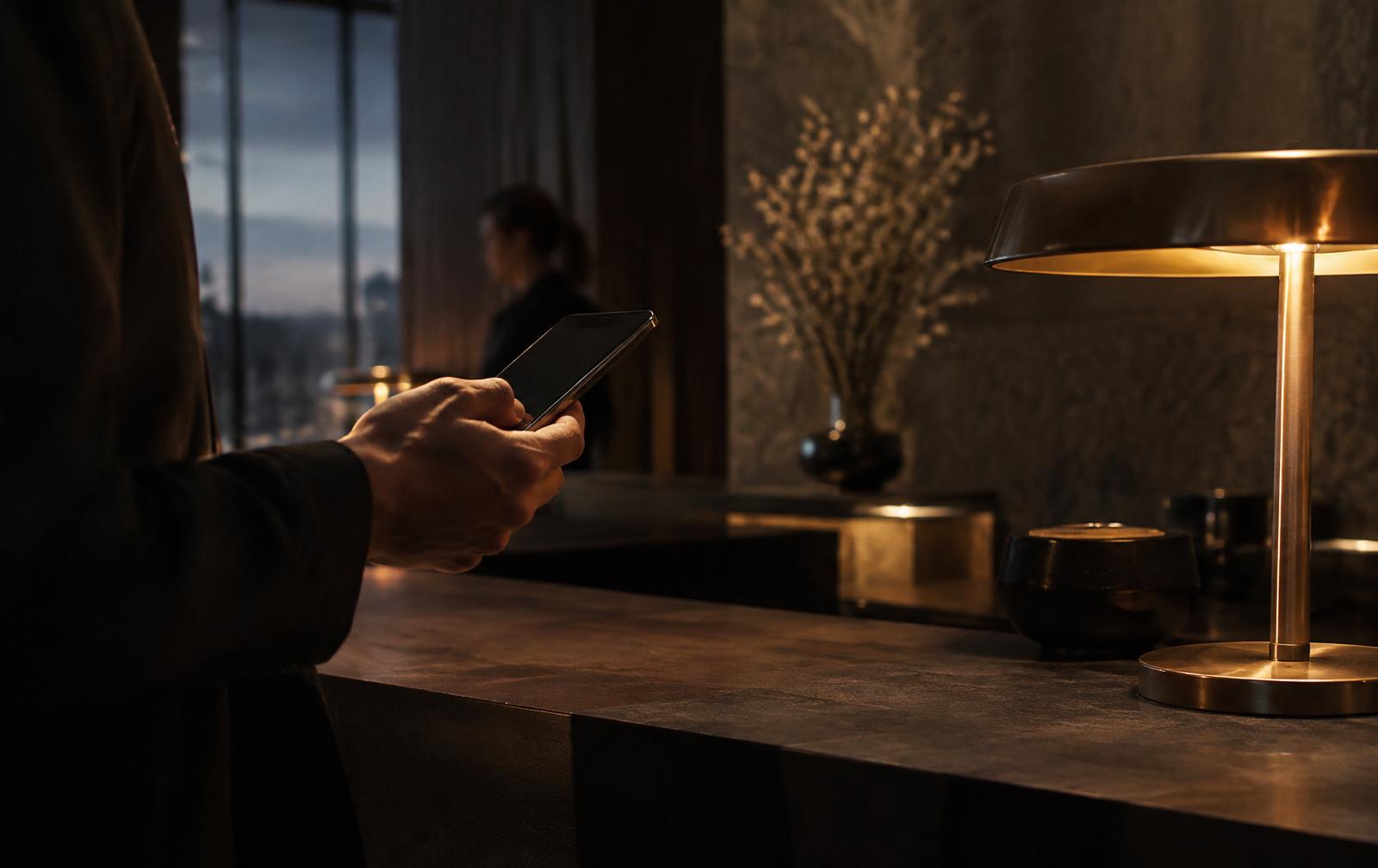
Luxury is quiet. Guests rarely remember the thread count. They remember the moment someone already knew their name, their table, the wine they ordered last time.
What is a hotel guest experience app?
A hotel guest experience app is a branded platform that brings pre-arrival preferences, on-property programming, access to the destination and membership recognition into one guest journey. Operational hotel apps focus on mobile check-in and digital keys. An experience app turns the stay into a relationship.
That personal touch will always come from people: the concierge, the host, the chef. What has changed is how much they can know before the guest walks in. A guest experience app lets a hotel anticipate, so the team can deliver a bespoke stay shaped by each guest's preferences from the first moment — the heart of hospitality experience design.
The flaw in traditional hotel apps: built for efficiency, not culture
Look at the hotel guest apps on the market today and they share the same list of features: mobile check-in, a digital room key, in-room dining, upsells and a chat with the front desk. Industry guides like Hotel Tech Report rank dozens of them, and almost all are designed to reduce front-desk workload and capture ancillary revenue.
That matters, and the major chains have invested heavily in it. Hilton says more than 80% of its portfolio now uses digital keys. Marriott Bonvoy guests check in, open their room and request services from their phone.
Guests want it too. In a 2025 Mews survey of 2,000 US travelers, 70% said they are likely to check in by app or kiosk instead of at the front desk.
But an app built only for operations is forgettable. It makes the stay more efficient. It doesn't make it more meaningful. In lifestyle and boutique hospitality, the app can do something else. It can carry the culture of the brand across the entire guest journey.
Operational app vs. guest experience app
- Operational white-label app: generic look, front-desk workload, digital key and room service, forgotten after check-out.
- Guest experience app: designed like the brand, pre-arrival preferences, curated access to the destination, a membership that continues between stays.
Custom vs. white-label: why boutique hotels can now build their own
Until recently, a custom app meant a dedicated tech team, a long development cycle and a significant budget. Most independent hotels settled for white-label platforms with their logo on top.
AI has changed that. A small team can now design and build an app that looks, sounds and works like the brand, integrated with the property management system, CRM and point of sale the hotel already uses. The question is no longer whether a boutique hotel can have its own app. It's what that app should do. Here is how we see it.
1. The stay starts before arrival
A few days before check-in, the guest receives a short pre-arrival questionnaire. Allergies and dietary restrictions. Favorite foods and drinks. The experiences and activities they'd like to try. Whether they're traveling for rest, work or a celebration.
The kitchen already knows they don't eat gluten and prepares a dish for them. Their favorite wine is waiting in the room. The team has reserved a spot at the sunrise yoga session they asked about, and a bottle has been chosen for the anniversary they mentioned. The welcome feels personal because it is.
Guests are ready for this. In the same Mews survey, 93% of travelers said they are willing to share personal data to get a better stay. The most common things they're happy to share are check-in times, food and beverage preferences, and the activities they want to do.
Hyatt has built much of its reputation on guest recognition: remembering room preferences and names. A boutique hotel can go further, because it has fewer guests and more freedom to act on what it learns.
2. The hotel becomes a doorway to the destination
A guest's best memories of a trip often happen outside the hotel. The app can bring those moments into the brand.
- On property: wellness sessions, tastings, chef's tables, talks, live music and seasonal programming.
- Off property, through curated partners: local guides, cultural tours, outdoor adventures, artisan workshops, the best restaurants and bars in the neighborhood, a private chef for a villa or a residence.
The hotel extends its offer far beyond what it could run in-house, without adding headcount, and earns a commission on what it sells. The guest gets a trusted, curated way into the destination. Local partners receive guests who arrive already trusting the recommendation.
The industry is moving in this direction. Technology trend reports for 2026 point to hotels selling spa, F&B and activities in a single booking flow, with packages assembled around each guest's profile. For the hotel, that means more ancillary revenue and a longer engagement with every guest.
3. Guests become members
Every stay should leave the hotel knowing the guest a little better. Birthdays. Anniversaries. The favorite table. The room type they always request. The events they attended. With a single guest profile, the hotel stops treating each stay as a new transaction and starts building a relationship. That relationship shows up in small, well-timed gestures:
- An invitation to a members' dinner when they're in town
- A preferred rate for their anniversary weekend
- A birthday message with something only the hotel could offer
- Priority access to new programming before it opens to the public
Soho House is the clearest example. Its app runs the entire member experience: booking tables and bedrooms, signing up for events, joining member groups by interest and settling the bill, with member rates applied automatically. The app is part of what being a member feels like.
citizenM took a different path. It replaced points with a simple monthly membership: a discount on every stay, a guaranteed room, complimentary late check-out when available and members-only events.
Lifestyle brands can take the best of both: the sense of belonging of a members' club and the simplicity of a membership guests understand. Members book direct, which reduces dependence on online travel agencies and the commissions that come with them.
4. Members bring members
The strongest marketing in hospitality has always been a guest telling a friend. An app can build that into the product. A guest shares an invitation to a dinner, a gathering or a weekend program. The friend arrives already part of the circle, welcomed by name. The hotel knows who introduced whom and can recognize the guest who made the referral.
Word of mouth stops being something the hotel hopes for and becomes something it designs.
5. Belonging becomes the reward
Most loyalty programs reward spend. Lifestyle brands can reward participation. Guests earn points for room nights, experiences and events, then move through tiers that unlock things money can't easily buy: a private dinner with the chef, a suite upgrade, a place at an invitation-only gathering, early access to the next opening.
The idea isn't new. Years ago, Accor tested a gamified app that gave members badges for staying across different destinations and brands, then converted those badges into loyalty points. What's different now is that a boutique brand can design the experience around its own culture: recognition for every wellness ritual, every cultural program, every local partner visited.
Guests are asking for this kind of reward. In the Mews research, 68% of travelers said personalized experiences keep them more loyal than points.
6. One profile, every property
For a brand with more than one property, the app becomes the thread that connects them. The guest who loves your hotel in Lisbon discovers your new opening in Mexico City in the same app. They're recognized from day one, their preferences already on file. The app promotes upcoming openings, signature weekends and programming across the portfolio to the guests most likely to book.
That's how a collection of hotels starts to feel like one brand, and how a repeat guest becomes a member of the brand instead of a guest of a single property.
4 principles for a branded hotel app guests actually keep
An app doesn't create a culture. It carries one. A few principles matter more than any feature:
- Ask for consent, and use it well. Guests share information when they see what they receive in return. Ask only for what the team will act on, and let guests see the difference it makes.
- Keep it simple. Five features executed beautifully are worth more than twenty nobody opens.
- Connect it to the team. A pre-arrival questionnaire is worthless if the chef never sees it. The app has to feed the people who deliver the experience, front-of-house and back-of-house.
- Design it like the brand. The app should feel like the lobby, the service and the welcome. It is one more space of the hotel — and it should grow from the same concept.
The real opportunity
The major chains will keep using apps to make operations more efficient. Boutique and lifestyle brands have a different opportunity: to use the app to make the stay more personal, the community stronger and the brand present long after check-out.
Good technology gives a team what it needs to be more human with every guest. That is the future of lifestyle hospitality.
Agustín Helguero Leone is the founder of Affinity Consulting, a hospitality experience consultancy for boutique hotels, restaurants and lifestyle real estate. We work with owners, operators and investors to develop guest experiences, programming, and the systems and technology that carry them across every property. Meet the team, or send us a message.
Frequently asked questions
Why should a boutique hotel build its own guest app instead of using a white-label one?
White-label apps are built for operations: check-in, keys and upsells. A custom app can look and feel like the brand and carry its culture — preferences before arrival, curated experiences, and a membership that continues between stays.
What features should a lifestyle hotel guest app include?
A pre-arrival questionnaire, on-property programming and curated local partners, a single guest profile, a membership with well-timed gestures, member referrals, rewards for participation, and recognition across every property.
How does a branded guest app support direct bookings?
Members book direct through the app, which reduces dependence on online travel agencies and the commissions that come with them.
Can a custom hotel app connect to the systems a hotel already uses?
Yes. With AI, a small team can build an app integrated with the property management system, CRM and point of sale the hotel already uses.
Sources
- 10 Best Hotel Guest Apps of 2026 – Hotel Tech Report (opens in a new tab)
- The Hotels Leading the Industry in 2026 – Hospitality Net (opens in a new tab)
- The Future of Hotel Technology: 30 Key Trends for 2026 – Hospitality Net (opens in a new tab)
- 70% of travelers would skip the front desk – Mews (opens in a new tab)
- Personalization beats points – Travel Daily News (opens in a new tab)
- All the Soho House app updates – Soho House (opens in a new tab)
- citizenM launches loyalty program – LODGING Magazine (opens in a new tab)
- Places by Le Club AccorHotels: the rise of gamification – Journal des Palaces (opens in a new tab)