Close your eyes and think about the best place you have ever stayed. Chances are you remember the light, the people, maybe a dinner. But underneath all of it, there was a sound. And that sound shaped how you felt far more than you realized.
Most hotels still treat music as background. A random playlist, a streaming service on shuffle, the same tracks from breakfast to midnight. In my experience, that is one of the most overlooked mistakes in hospitality. Music is not decoration. It is one of the most powerful tools a brand has to create atmosphere, tell a story, and make people feel they belong somewhere.
The science behind it
This is not only a feeling. It has been studied for decades.
In one of the most cited studies in hospitality, researcher Ronald Milliman found that slow-tempo music increased dining time by nearly 25% compared to fast-tempo music. Same menu. Same space. Guests who stayed longer also spent more, especially in beverage purchasing.
The style of music matters as much as the tempo. In one study, diners exposed to classical music spent more than those hearing pop, likely because the environment felt more elevated.
And my favorite example comes from a supermarket in the UK. Researchers played French and German music on alternate days next to a wine display. French music led to French wine outselling German by five bottles to one, whereas German music led to German wine outselling French by two bottles to one. The most interesting part: customers were unaware of these effects of music on their product choices.
That is the point. Guests rarely notice the music consciously. But they feel it, and it guides how they experience everything else.
Music as storytelling, from sunrise to late night
A great hotel does not have one playlist. It has a journey.
The music at breakfast should feel light and gentle, something that helps people wake up and start their day. In a lobby or a space where people come to work, the sound should support focus without distracting. By the pool or at a beach club, it can open up and invite people to relax. In the spa, it slows everything down. At dinner, it should carry the evening without competing with conversation. And later at night, in the bar, it can build energy and bring people together.
Each moment has its own emotional signature. When the music follows that arc, the whole day flows naturally, and guests feel it without needing anyone to explain it.
Volume is part of this too. The right song at the wrong volume breaks the experience. The goal is always a soundtrack that accompanies people, not one that interrupts them.
Every city has its own sound
I have been lucky to experience music culture in Ibiza, Tulum, Mykonos, Amsterdam, Berlin, Paris, Barcelona, New York, and Miami, to name a few. Over the years I have followed music through almost every major city and scene in the world, from festivals in Croatia to rooftops in Athens to beach clubs across Italy.
That journey is what built my taste. Not just knowing tracks or artists, but understanding music as culture. Every city has its own identity. The sunset sound of Ibiza is not the jungle sound of Tulum, Berlin's underground has nothing to do with the glamour of a Miami night, and Paris sounds nothing like Barcelona.
A hotel should reflect where it is. But it can also borrow. Knowing the character of each scene means I can make a place sound like its own city, or blend it with the influences of another. A New York hotel with a touch of Tulum. A Mediterranean terrace with the depth of Berlin. Mixing those influences is how you create a specific mood and a character that feels unique.
When the music speaks the language of a place, guests connect with it on a deeper level. It creates a sense of belonging, and belonging is what creates community.
Why this matters for high-end guests
Today's luxury traveler is not who luxury used to be designed for. Many CEOs, founders, creatives, and tech professionals go to Burning Man, spend summers in Ibiza and Mykonos, travel to Tulum, and know Boiler Room sets by heart. Music culture is part of their identity.
Electronic music used to be niche and underground. Today it is mainstream. But within that popularity there are specific sounds that communicate sophistication: organic house, downtempo, ambient, deep house, disco. Knowing the difference, and knowing how to build a progression from one to the other, is what separates an elevated experience from a generic one. This is especially true for adults-only properties and lifestyle brands, where the atmosphere is the product.
The brands that understood it
Some of the most iconic hospitality brands built their identity around sound.
Scorpios in Mykonos is the clearest example. When they launched, people laughed at their concept and at the "shamanic house music" nobody had heard before. Their opening season was rough, but they didn't compromise and make it more commercial. That decision built a global following. Scorpios joined the Soho House & Co. family in 2019 and has since opened in Bodrum, with more locations planned for the future. Much of that value came from its music and its events.
Habitas and Azulik in Tulum are other examples I know from the inside. Each has a distinctive sound that guests recognize and associate with the place. You could play their music anywhere in the world and people who have been there would feel transported back.
Live performance changes everything
Playlists set the foundation. Live performance creates the memory.
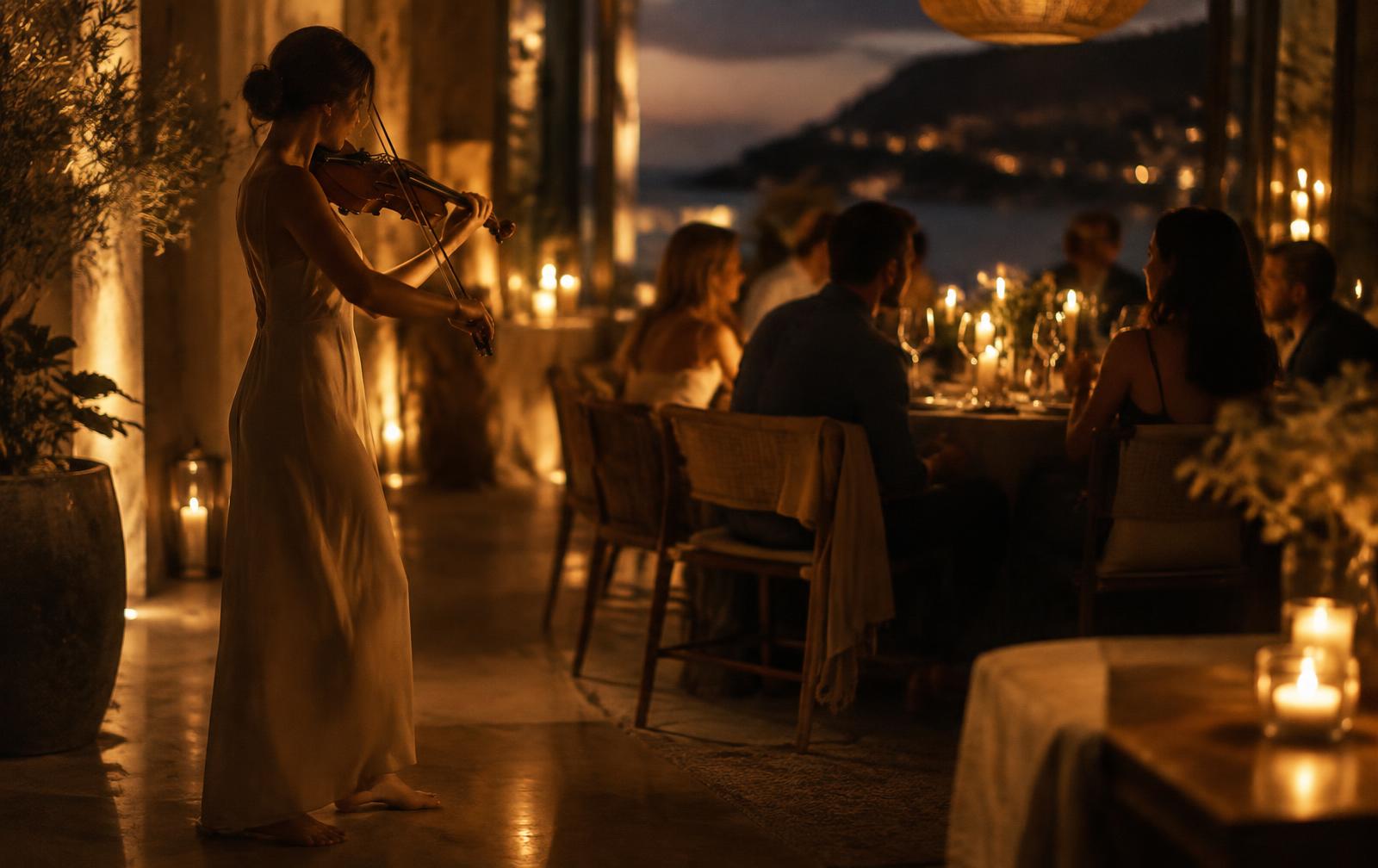
Imagine arriving for dinner and a violinist is playing over a soft electronic soundscape. The room feels cinematic. People are still talking, still enjoying their meal, but there is a soundtrack carrying the evening. Everyone feels part of the same moment. That is the kind of experience guests take photos of, talk about, and come back for.
The same goes for a well-curated DJ set at sunset or an artist who performs an ambient journey on a rooftop. When the right artist meets the right space at the right time, the hotel stops being a place to stay and becomes a place to be.
Why I care about this
I have spent more than ten years as a DJ and as part of the music industry. I have played at hotels, beach clubs, and restaurants in Tulum, Ibiza, Mykonos, and New York, and worked as an artist liaison alongside names like Luciano and Blondish. That experience taught me two things: how music moves a room, and what high-end guests actually respond to.
Sound is one of the secret pieces of an elevated experience. It is invisible, but it is felt in every moment of a stay. The brands that treat it with the same care they give to design, food, and service are the ones people remember.
Today I work with hotels and lifestyle brands on exactly this: defining their sound, curating music, and bringing the right artists into the right moments. If you are opening a property or rethinking the atmosphere of an existing one, I am always happy to talk about how music can shape the experience.